I was thinking today about the movie Join or Die, based on the book Bowling Alone by Robert Putnam, and how it all relates to the friendship recession that I talk about on this blog.
Here are 42 somewhat random take-aways, notes, and highlights from both.
- The bowling alone paradox — More Americans bowl today than ever before, but bowling leagues have collapsed. We’re doing alone what we used to do together.
- The activity vs. the connection — Bowling (the activity) isn’t disappearing. Bowling leagues (the connection) are. The activity may still be happening, but no social capital is being built.
- Card playing is extinct — The total decline in adult card playing is practically 100%. Card games used to be social infrastructure. Now they’re gone. Personal note: I’ve enjoyed playing Rummikube, Rack-O, and Taco Cat Goat Cheese Pizza with my family recently.
- The scale of collapse — Between 1985 and 1994, active involvement in community organizations fell by 45%. Half of America’s civic infrastructure vanished in barely two decades. It’s as if half the roads just disappeared.
- The silent reversal — For two-thirds of the 20th century, Americans joined more groups each decade. Then sometime in the 1960s, the tide silently reversed. No announcement. No moment. Just reversal.
- The 1960s inflection point — Something changed in the 1960s. The “joining” trend that had been climbing since 1900 suddenly reversed. We still don’t fully understand why.
- PTAs, unions, churches, lodges — Membership collapsed across PTAs, unions, rotary clubs, churches, and fraternal organizations like Odd Fellows and Elks.
- We’ve stopped having people over — The frequency of inviting friends to one’s home has dropped significantly. The most basic act of hospitality is dying. Plug: my book The 2-Hour Cocktail Party offers a practical solution for bringing this back.
- What is social capital? — Social capital = the networks of relationships among people who live and work in a particular society, enabling that society to function effectively.
- Generalized reciprocity — The touchstone of social capital: I’ll do this for you now without expecting anything immediately, confident that down the road someone will return the favor. This is how functional societies work.
- Superglue vs. WD-40 — Bonding social capital is like sociological superglue (connects people who are alike). Bridging social capital is like sociological WD-40 (connects people who are different).
- We need both types — Bonding creates support and safety. Bridging creates tolerance and understanding. Both are necessary.
- Bridging spaces are dying — The loneliness epidemic is partly fueled by a lack of “bridging” spaces where we interact with people outside our bubble. Bowling leagues were bridging spaces. So were union halls, PTAs, and town meetings.
- The ripple effect of clubs — A single local club creates spillover effects: trust in neighbors, willingness to help strangers, belief that collective action works.
- Schmoozing is social capital — Schmoozing is purely social capital. It’s not about accomplishing a task; it’s the intrinsic pleasure of company.
- Join one group, cut death risk in half — If you belong to no groups but decide to join one, you cut your risk of dying over the next year in half. One group.
- Social isolation equals 15 cigarettes a day — Chronic loneliness is as lethal as smoking 15 cigarettes per day. Statistically, the correlation between social isolation and death is as strong as the correlation between smoking and death. We treat smoking as a public health crisis. We don’t treat loneliness the same way.
- 2-5x death risk — People who are socially disconnected are between 2 and 5 times more likely to die from all causes compared to people with close ties.
- Heart disease, stroke, dementia — Loneliness significantly increases risk of heart disease, stroke, dementia, and premature death.
- The chronic stress mechanism — Humans evolved to survive in tribes. When isolated, our bodies enter chronic fight-or-flight mode. This degrades our immune system over time.
- Loneliness is a biological alarm — Our bodies evolved for tribal living. Isolation triggers biological alarm systems that degrade our health. We’re fighting millions of years of evolution when we live disconnected.
- Social capital keeps us sane — As Putnam writes: “Social capital keeps us sane, healthy, and happy.”
- The happiness data — Regular club attendance is the happiness equivalent of getting a college degree or more than doubling your income.
- Not all connections are equal — Social media provides “thin” connections that don’t satisfy our biological need for community.
- Face-to-face matters — The antidote to loneliness is physical, in-person gathering. Evolution didn’t prepare us for digital friendship.
- Trust is built through boring repetition — You don’t trust someone because of one deep conversation. You trust them because you’ve seen them show up every Tuesday for a year.
- The soup test — Pete Buttigieg’s question: “Are the people you’re following on Twitter or Instagram going to bring you soup when you’re sick?”
- Television is the main villain — Television is the single most consistent predictor of civic disengagement. It’s hand-tailored entertainment consumed in private, even utterly alone. And since Putnam’s book was written, it’s not just television—it’s our phones, social media, and short-form video.
- The commute tax — Each additional 10 minutes in daily commuting time cuts involvement in community affairs by 10%. Suburban sprawl killed community.
- Spatial fragmentation — We spend more time alone in our cars and working from home. The geography of modern life doesn’t support spontaneous socializing.
- The magic bullet: Join anything — The prescription is deceptively simple: Join a club. Any club. Knitting circle, kickball league, choir, volunteer corps. The specific activity doesn’t matter.
- Participation over observation — Mental health and democracy both require us to be participants rather than observers.
- The boring work matters — Democracy is a pain in the ass (Jane McAlevey’s quote). True community work is often boring and frustrating. Doing it anyway is the only way to build power.
- If there’s nothing to join, create one — If there’s not an organization you want to join, create one. This applies to hosting meetups and happy hours too. Another plug for my book The 2-Hour Cocktail Party here: it provides a framework for creating these gathering spaces.
- Family dinner is infrastructure — Family dining is perhaps the most important single predictor of child and community health. And it’s disappearing. (Personal note: I’m thankful to my parents who always insisted on us eating dinner together every night around the table and never in front of the television.)
- The training ground — Ordinary civic leadership in clubs and organizations is the training ground for democracy.
- You can change history — America doesn’t have to be the kind of America you’ve lived in your whole life. We have the power to rebuild what’s been lost.
- Women entered the workforce — One reason for decline: women used to provide unpaid social labor (organizing PTAs, church groups, etc.). When women entered the workforce, no one replaced that labor.
- Maybe the old groups needed to die — Some of the groups that collapsed (like racially segregated lodges) deserved to die. The question is: what replaced them?
- Digital connection isn’t zero — While “thin,” digital connections do provide value for geographically dispersed communities, rare interests, and marginalized identities who couldn’t find local connection.
- The quality of groups matters — Not all groups are beneficial. Cults, gangs, and extremist groups build social capital too—but toward harmful ends.
- The internet didn’t solve it — We thought digital connection would fix our isolation. It didn’t. What is the foundational thing that’s actually going to move us forward?
Bonus: Photos
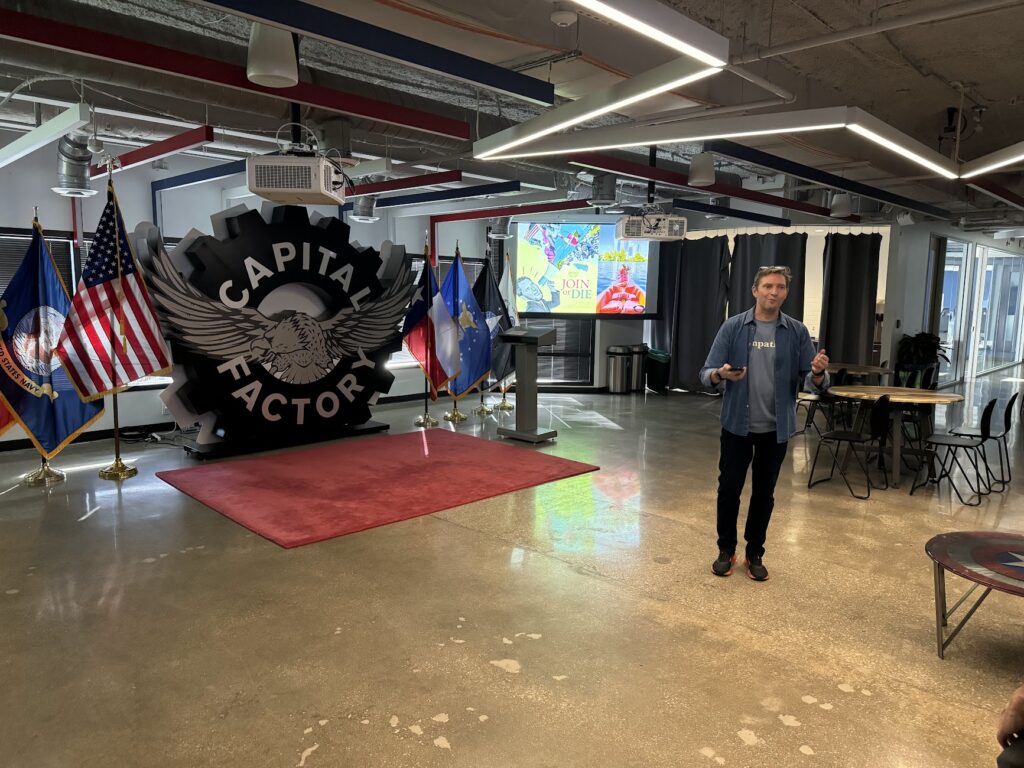
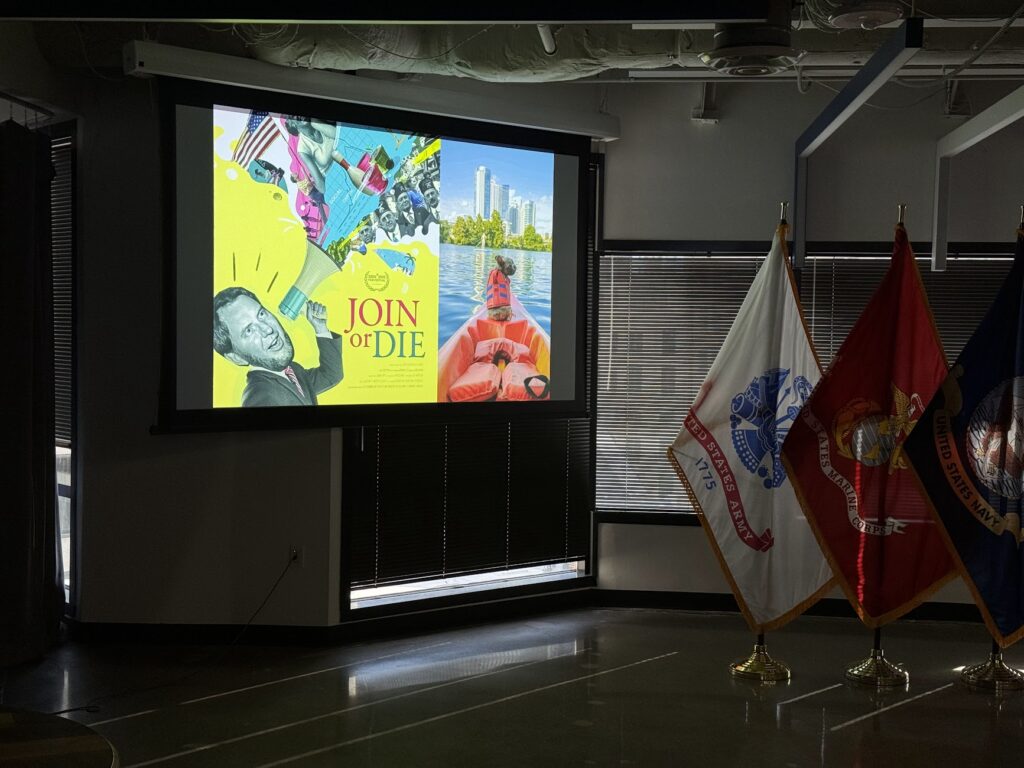
I went to a Join or Die screening, organized by Steph Smith, in May 2024.
For the data behind the friendship recession, check out this breakdown of the stats.
One woman signed up for a comedy class just to meet people. Everyone else in the class had the exact same reason.
I found a great Washington Post piece about the secret to making friends as an adult. The answer is simple: be the one who reaches out first.
Here are some photos from that:
Two days later, apropos of nothing in this post, I went to an Airbnb Experience involving baby goats.
Here’s a picture of me with one of those goats.

The end. Thanks for reading!!