Who's Actually Lonely in America? The Data Might Surprise You
Last updated: May 2026
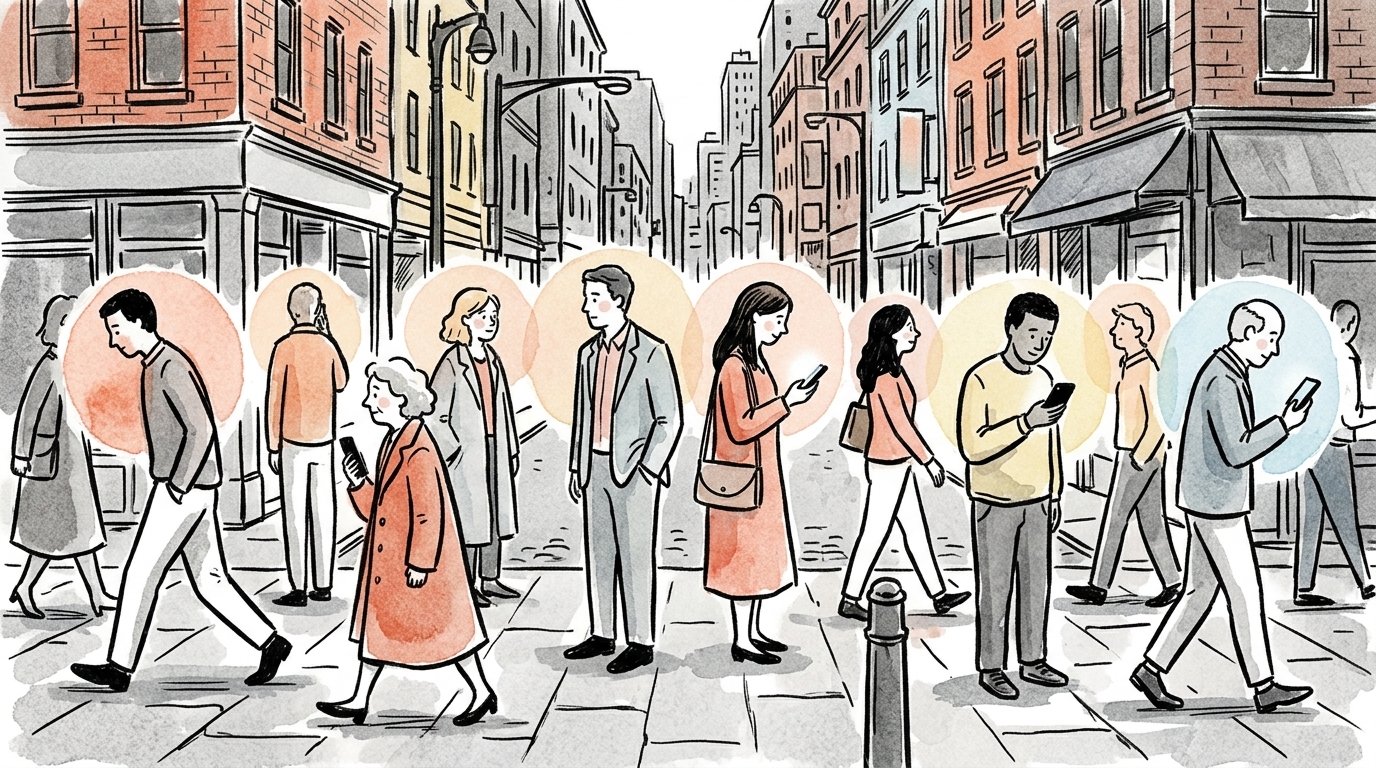
Who's the loneliest person you know? I bet you're picturing the wrong person.
The data on loneliness in America is full of surprises. Young adults feel it as much as seniors. Parents feel it more than people without kids. And income predicts loneliness more than almost anything else.
I run this site because the friendship recession is real. And I read a ton of research about it. But when I looked at the actual numbers on who is lonely, it didn't line up with what I expected.
- 30%of adults 18-34 feel lonely daily or several times a weekAmerican Psychiatric Association, 2024
- 37%of adults 50-80 say they lack companionshipUniversity of Michigan, 2023
- 58%of U.S. adults are considered lonelyCigna / Morning Consult
- 2xbisexual and transgender adults' loneliness rate vs. the general populationCDC, 2022
Young Adults Are Struggling Too
Most people think loneliness is an old person's problem. It's not.
30% of Americans ages 18-34 feel lonely several times a week. That's from a 2024 American Psychiatric Association survey. Almost a third of young adults. Every single week.
Loneliness actually peaks twice in life. Once in early adulthood. And again in old age.
37% of adults ages 50-80 say they lack companionship. That comes from a 2023 University of Michigan poll. So older adults feel it too. But young people are right there with them.
This one hit me. I think we assume young people have it easy socially. They don't.
I called a 24-year-old about this and got better advice than most of the research gives. Here's what Gen Z actually does about the friendship crisis.
Money Matters More Than You Think
Loneliness isn't spread evenly across income levels.
People in households earning less than $24,000 a year are significantly lonelier. That's from a 2023 Gallup study. It makes sense when you think about it. Socializing costs money. Going to dinner. Joining a gym. Traveling to see friends. Even hosting people at home costs something.
When you're stressed about rent, friendship drops down the priority list fast.
Race, Ethnicity, and Loneliness
The loneliness gap across racial groups is big.
A Cigna and Morning Consult study found that 75% of Hispanic adults and 68% of Black adults were considered lonely. Compare that to 58% for the general population.
That's a huge difference. And it points to deeper issues. Systemic inequality, fewer community resources, and less access to social infrastructure all play a role.
LGBT Adults Feel It More
Bisexual and transgender adults report loneliness at about twice the rate compared to the general population. That's a striking number.
Social rejection, discrimination, and fewer built-in community spaces all contribute. Many LGBT people move away from their hometowns to find acceptance. But that means leaving behind family and old friends.
Starting over socially is hard for anyone. It's even harder when you're doing it out of necessity.
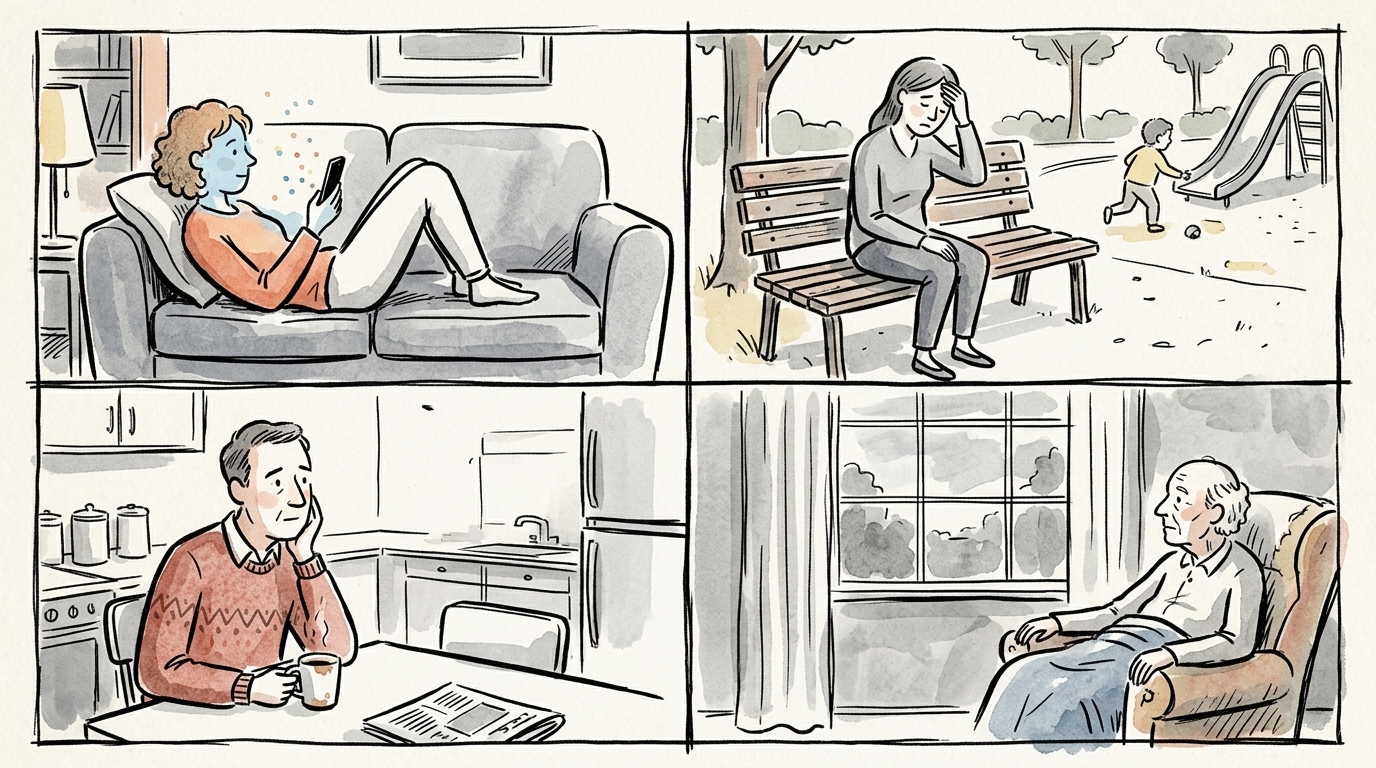
Parents Are Lonelier Than Non-Parents
This one might surprise you the most.
Nearly two-thirds of parents are lonely. That's more than non-parents. Having kids doesn't solve loneliness. In many cases it makes things worse.
And it hits moms especially hard. Over half of mothers with young children report serious loneliness according to a 2021 Harvard study. You're surrounded by little humans all day. But you're starving for adult conversation.
I've heard this from so many parents. They love their kids. But they miss their friends.
There's a fix for this one that costs about four dollars. If you have kids, you're already hosting birthday parties, and those parties are full of parents standing around with nothing to do.
Put one line on the invitation: we'll have name tags for the parents so we can all mix, mingle, and meet someone new. That's the whole move. My friend Samir has three young kids. He sees the same parents at every soccer game and in the school pickup line, and he'd genuinely forgotten their names. Name tags fix that in one afternoon.
The Gender Surprise
Here's one that goes against the popular narrative.
Men and women report roughly equal levels of loneliness. You hear a lot about the "male loneliness epidemic." And it's true that 15% of men said in 2021 they had no close friends.
But being physically isolated isn't the same thing as feeling lonely. Women feel it just as much. The experience might look different. But the pain is the same.
Why This All Matters
Loneliness isn't just a feeling. It's a health risk.
Researcher Julianne Holt-Lunstad found that lacking social connection is equivalent to smoking 15 cigarettes a day. We treat smoking like a public health crisis. We should treat loneliness the same way.
And here's one more thing the research shows. People are happiest when they interact with a variety of different people. Not just close friends. Acquaintances, neighbors, coworkers, and strangers all contribute to wellbeing.
That line about variety is the one I'd underline. The biggest opportunities in life tend to come from people we barely know. New jobs, new business, even new relationships. Not from our closest friends.
And those loose connections are the first thing to go. Most people do fine with family and best friends. It's the acquaintances that quietly disappear as you get older, and nobody notices until the whole network is gone.
That means every small interaction counts.
What You Can Do
You don't have to solve loneliness overnight. But you can start small:
- Talk to people outside your inner circle. Chat with the barista. Say hi to your neighbor. Variety of connection matters.
- Check on your parent friends. They're probably lonelier than they let on. Invite them to something. Even if they cancel, they'll appreciate the ask.
- Host a small gathering. It doesn't have to be fancy. I wrote The 2-Hour Cocktail Party to make this easy for anyone.
- Join one group. Any group. A running club, a book club, a volunteer team. The research says joining even one group makes a big difference.
- Reach out to someone you haven't talked to in a while. Send a text. Make a call. It takes 30 seconds.
Join one group, then actually go. Joining isn't the part that works. Showing up again and again is. A church group, a bowling league, a knitting club, a software meetup. It doesn't matter which one. It matters that there's a built-in reason to come back.
The Bottom Line
Loneliness doesn't discriminate the way we think. It hits young people, parents, minorities, and low-income households especially hard. But it touches almost everyone.
The good news is that small actions help. You don't need to overhaul your whole social life. Just do one thing today.
If you want to learn more about the friendship recession and what's behind it, check out my main overview page. And if you're looking for practical advice, read about the secret to making friends as an adult. I also keep a running 2026 friendship recession statistics roundup.
Source: Based on reporting by Allie Volpe for Vox (August 2024), with data from the American Psychiatric Association, University of Michigan, Gallup, Cigna/Morning Consult, and Harvard.
Corrected September 2026: this post credited the 30% young-adult loneliness figure to the American Psychological Association. It comes from the American Psychiatric Association's Healthy Minds poll.

Nick Gray
Author & Entrepreneur
I wrote The 2-Hour Cocktail Party to help people build real friendships through small gatherings. This site collects research and stories about the friendship crisis.